
Kansas City’s historic 18th & Vine District has always been a place where culture and storytelling come together. Often compared to Black Wall Street districts across the country, 18th & Vine became one of the nation’s most important centers of Black business, entertainment, and community life.
Through Revive the Vine, Kansas City’s $400+ million reinvestment initiative, historic landmarks are being restored alongside major infrastructure improvements of public spaces. Projects include the 18th Street pedestrian mall, improvements to Paseo, enhancements to the Negro Leagues Baseball Museum campus, and the restoration of the Boone Theater.
But the story of 18th & Vine is not one of revival because it never truly disappeared.
As U.S. Representative Emanuel Cleaver remarked at the Boone Theater’s ribbon cutting, “Everything that appears to be dead ain’t dead. This is a resurrection. We have a story to tell.”
This story is one of resilience. While buildings aged and businesses changed, the cultural significance of the district never faded. Today’s investments are strengthening a neighborhood that has always been central to Kansas City’s identity.
It’s also why the Gem and Boone Theaters were chosen as the primary venues for the inaugural Full Tilt Film Festival. The festival celebrates the intersection of sports and entertainment, bringing together athletes, filmmakers, studio executives, and franchise leaders to explore how sports stories are told and shared.
Few places are better suited to host those conversations than 18th & Vine. Throughout the festival, attendees will gather in the historic Gem Theater and newly reopened Boone Theater for screenings and panels that celebrate storytelling in all its forms.
Before the festival begins, take a look at the history of the two theaters that will serve as the heart of the Full Tilt Film Festival.
Gem Theater
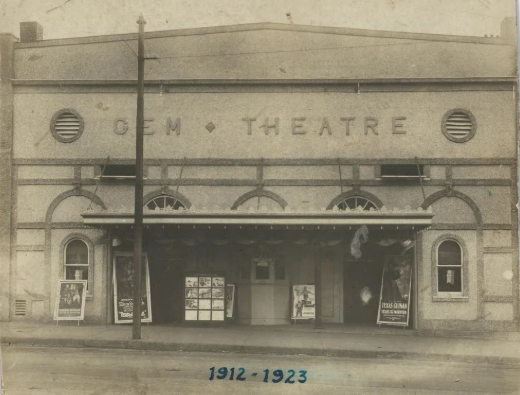
The Gem Theater wasn’t always called the Gem
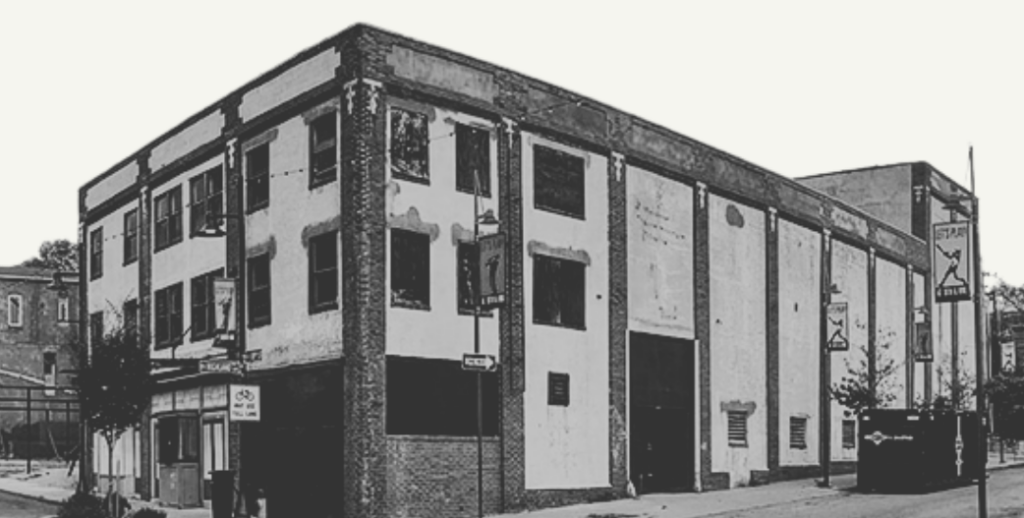
When it first opened in 1912, the theater was known as the Star Theater. Built by the Shriner and Powellson Amusement Company, it quickly became a cornerstone of Kansas City’s thriving 18th and Vine district.
It was one of Kansas City’s first movie theaters built for Black audiences
The Star Theater was constructed during an era when segregation limited where African Americans could shop, socialize, and enjoy entertainment. The theater was specifically created to serve Kansas City’s Black community and became one of the city’s earliest and most enduring theaters dedicated to African American patrons.
While many entertainment venues at 18th and Vine faded during the mid-20th century, the Gem endured. When it closed as a movie theater in 1960, it had operated longer than any other theater built for Kansas City’s African American community.
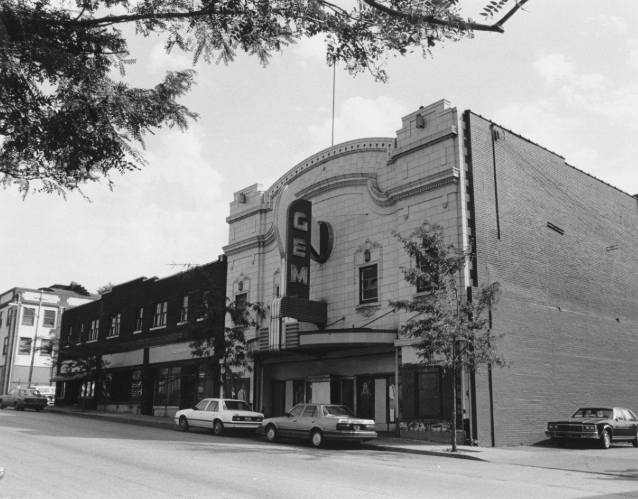
The Gem adapted with the times
When the Gem opened in 1912, movies were silent and accompanied by live music. As the film industry evolved, so did the theater.
In 1923 and 1924, the building was transformed from a simple brick structure into an elegant theater with a white terra cotta façade and ornate Baroque details.
By 1929, the arrival of sound films had changed moviegoing forever. The Gem embraced the new technology and remained a popular destination on 18th Street.
After World War II, the theater was updated again with Streamline Moderne and Art Deco influences. Through every era, the Gem continued to evolve while remaining a landmark of the 18th & Vine District.
The Building almost disappeared forever The Gem’s years as a movie theater ended in 1960, and by the 1980s it had faded into a shadow of its former glory. Like much of the historic 18th and Vine district, the Gem suffered from decades of decline after its closure. By the 1980s, however, local leaders recognized the importance of preserving the neighborhood’s cultural landmarks.
Mayor Richard Berkley and City Councilman Emanuel Cleaver helped spearhead a major revitalization effort that included restoring the historic theater.
Boone Theater
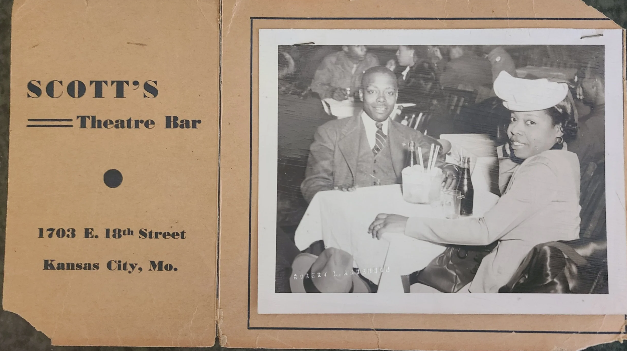
The Boone theaters story began before the building existed
Long before the Boone Theater’s building appeared on 18th Street, the site was home to an open-air movie venue known as Highland Gardens. In May 1912, owner J.T. Hurtt received a building permit to construct a tent and fence for a “picture show,” creating one of the earliest cinema experiences on the block.
The theater had three different names in just six years
The theater’s identity changed quickly during its early years. It opened in 1924 as the New Rialto Theater before being renamed the New State Theater in 1929. Just a year later, it became the Boone Theater. The final name was selected through a naming contest held in honor of John William “Blind” Boone, the celebrated pianist who passed away in 1927. Its namesake was one of Missouri’s most remarkable musicians The Boone Theater is named for John William “Blind” Boone, an African American pianist and composer who became one of the most celebrated touring musicians of his era. After losing his eyesight as an infant, Boone overcame significant obstacles to build a remarkable career. Combining classical training with the rhythms he absorbed from Black musical traditions, he developed a distinctive style that helped shape the sound of ragtime.
He used a parrot to help sell concert tickets
A very unique marketing tactic belonged to Boone and his longtime manager, John Lange Jr. When arriving in a new town, the pair would walk around with a parrot named Ed perched nearby. Curious children would gather to see the bird, giving Boone and Lange the perfect opportunity to spread the word about upcoming performances.
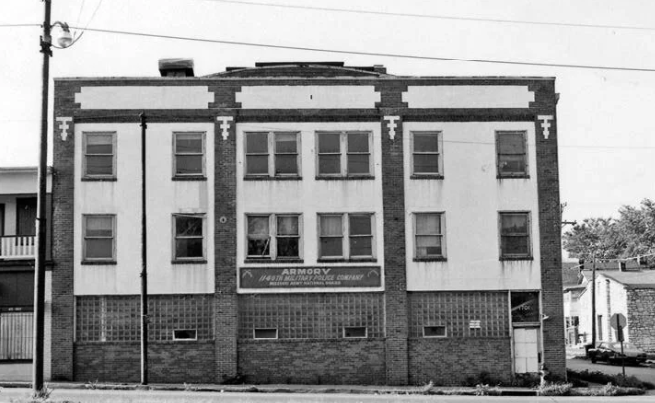
The theater later became a military armory
In 1949, the building was converted into an armory for the National Guard’s 242nd Engineer Battalion. Over the following years, several military units occupied the building, including the 104th Replacement Battalion, the 146th Engineer Battalion, and the 1140th Military Police Company. When the final military unit departed in 1971, the building was left vacant.
It is home to the Black Movie Hall of Fame
One of the Boone Theater’s unique and newest features is its connection to the Black Movie Hall of Fame, which celebrates the achievements and contributions of African Americans in film and television. The exhibit helps preserve and share stories that have often been overlooked in mainstream film history.
As Revive the Vine continues to invest in the district’s future, the Gem and Boone Theaters prove that progress and preservation can go hand in hand. The strongest communities find ways to celebrate their history while creating space for new stories to be told.
That spirit is reflected in the life of John William “Blind” Boone, whose guiding motto was, “Merit, Not Sympathy, Wins.” Despite facing blindness, poverty, and discrimination, Boone built a remarkable career through an unwavering belief in his craft.
While the quote is connected to Boone, it feels just as fitting for the Gem Theater and the 18th & Vine District as a whole. These theaters were not preserved simply because they were old buildings. They were saved because of what they represent and the generations of artists, entrepreneurs, musicians, filmmakers, and community leaders whose stories live within their walls.
That same spirit is what makes the Gem and Boone Theaters the perfect home for Full Tilt Film Festival. The festival celebrates people who pursue their craft at the highest level, whether they’re athletes or filmmakers. As attendees gather in these historic spaces, they’ll be adding their own stories to a district that has been bringing people together through culture, creativity, and perseverance for more than a century.
Today, the Vine is more alive than ever